

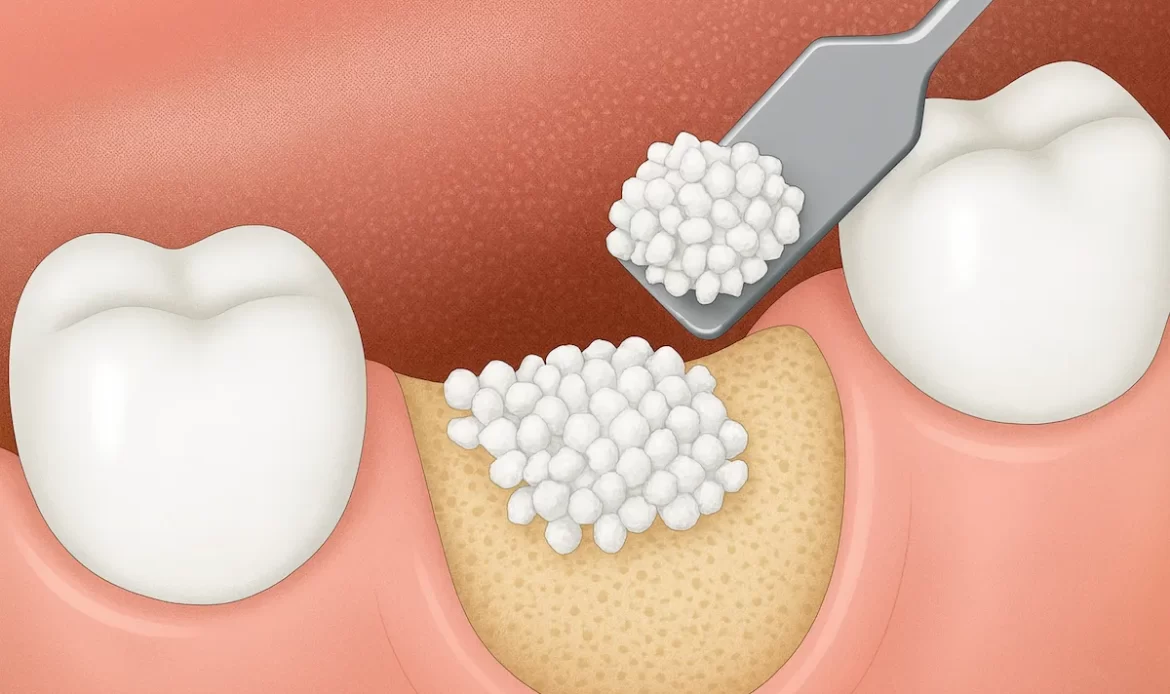

- Bone grafting restores jawbone volume and strength before dental implant placement.
- Graft materials can be autograft, allograft, xenograft, or synthetic (alloplast).
- The procedure is done under local anesthesia and takes 4–6 months to fully heal.
- Bone grafts are used after trauma, tooth loss, gum disease, or cyst removal.
- Proper post-op care—no smoking, alcohol, or hot foods—is vital for recovery.
Dental implants are among the most effective solutions for replacing missing teeth. However, successful implant treatment requires adequate thickness and density in the jawbone. For patients with bone loss or insufficient bone structure, bone grafting (also called bone augmentation) is an essential preliminary step. This procedure helps establish a stable foundation for the implant and ensures long-term success.
Table of Contents
ToggleWhat Is a Bone Graft?
A bone graft is a surgical procedure used to repair and regenerate bone tissue in the jaw area when bone loss occurs due to missing teeth, trauma, or other factors. It is typically performed before implant treatment to restore sufficient bone volume. During the procedure, the grafting material may consist of the patient’s own bone, synthetic substances, or bone particles derived from animal sources. Over time, the added material integrates with the jawbone and forms new bone tissue, strengthening the area and improving implant success rates.
Types of Bone Grafts
Dental bone grafts vary based on the material used and the method of application. The main types include:
- Autograft (Patient’s Own Bone): The graft material is harvested from the patient’s own body (e.g., another part of the jaw or the hip). This method offers the best compatibility and success rate as there’s no risk of rejection.
- Allograft (Human Donor): Sterilized bone tissue obtained from another human, processed to ensure safety and biocompatibility.
- Xenograft (Animal Source): Bone derived from animals (commonly bovine) that is processed for human use. It is one of the most frequently used graft types.
- Alloplast (Synthetic): Artificial grafts made from materials such as calcium phosphate. These are chemically similar to natural bone and stimulate new bone formation.
| Bone Graft Type | Source | Main Advantages | Ideal For |
|---|---|---|---|
| Autograft | Patient’s own bone | Highest biocompatibility; no rejection risk | Patients needing maximum stability and fastest healing |
| Allograft | Human donor bone | No second surgical site; widely available | Moderate bone defects before implant treatment |
| Xenograft | Animal-derived (usually bovine) | Long-lasting volume support; slow resorption | Large defects requiring sustained structural support |
| Alloplast | Synthetic materials | Safe, scalable, and customizable | Patients avoiding biological grafts or needing guided bone regeneration |
Who Needs a Bone Graft?
Bone grafting is recommended for patients who have insufficient bone volume or density in the jaw. Ideal candidates include those suffering from gum disease, trauma-induced bone damage, or bone loss prior to implant placement.
Situations where bone grafting is commonly used:
- Before Dental Implants: One of the most common reasons is to provide a stable foundation for implants in areas with bone deficiency.
- Long-Term Tooth Loss: After a tooth is extracted, the surrounding bone can shrink due to lack of stimulation, potentially leading to significant bone loss over time.
- Periodontal Disease: Advanced gum disease can cause deterioration of the supporting bone around the teeth. Bone grafts can help prevent tooth loss.
- Trauma and Injury: Fractures or defects in the jaw caused by accidents can be repaired using bone grafts.
- Developmental Issues: Some individuals may be born with or develop inadequate bone volume in the jaw, which can be corrected with grafting for both aesthetic and functional reasons.
- Post-Tumor or Cyst Removal: After benign tumors or cysts are surgically removed from the jaw, bone grafting may be used to fill the resulting voids.
Build a Strong Foundation for Implants
How Is Bone Grafting Performed?
The procedure is typically performed under local anesthesia, though sedation or general anesthesia may be used in some cases. The steps include:
- Anesthesia: The area is numbed to ensure a pain-free procedure.
- Incision: A small incision is made in the gum tissue to expose the jawbone.
- Graft Placement: The bone graft material is placed in the area with insufficient bone. Membranes or small screws may be used to stabilize the graft.
- Stitching: The gum tissue is repositioned over the graft and sutured.
- Following the procedure, a healing period is required for the graft to fuse with the natural bone.
How Long Does Bone Graft Recovery Take?
Recovery typically takes 4 to 6 months, depending on the patient’s overall health and the type of graft used. Full integration of the graft material into the jawbone takes time. During this period, avoiding smoking, alcohol, and strenuous physical activity is essential for optimal healing.
Post-Operative Care After Bone Graft Surgery
To promote healing and prevent infection, the following guidelines should be followed:
- Avoid hot foods and drinks for the first 24 hours.
- Do not smoke or consume alcohol.
- Take prescribed antibiotics and painkillers as directed.
- Do not brush the surgical site, but maintain good overall oral hygiene.
- Apply cold compresses to reduce swelling and bruising.
Bone Graft Surgery Costs in 2026
The cost of a bone graft depends on several factors, including the type of graft material used, the complexity of the surgery, the type of anesthesia, and the clinic’s location. For accurate pricing in 2026, a consultation with a qualified dentist is recommended. You can visit Dentakademi Dental Clinic for a personalized treatment plan and up-to-date cost information.
Frequently Asked Questions About Bone Grafting
What is a bone graft?
A bone graft is a procedure where missing or weak jawbone tissue is supplemented with material that encourages new bone growth.
Is bone graft surgery painful?
The procedure is done under local anesthesia, so no pain is felt during the operation. Mild post-operative discomfort can be managed with pain relievers.
Is bone grafting a risky procedure?
Like any surgery, it carries some risks (e.g., infection, bleeding), but when performed by an experienced oral surgeon, the risk is minimal.
Does a bone graft always succeed?
Bone grafts have a high success rate, especially when autografts (from the patient’s own body) are used.
How long does bone graft surgery take?
Depending on the size of the area and method used, the procedure typically lasts between 30 minutes and 1.5 hours.
Where is the bone graft taken from?
Graft material can come from the patient’s own body (jaw, hip), another human donor, animal sources, or synthetic alternatives.
What is the purpose of a bone graft?
It strengthens the jawbone to provide a solid foundation for treatments such as dental implants and can also prevent bone loss after tooth extraction.
Can bone grafting fail?
While rare, failure can occur due to infection, poor blood supply, or underlying health conditions. If this happens, a repeat procedure may be necessary.
 English
 Français
 Русский
 العربية
 简体中文
 Español
